


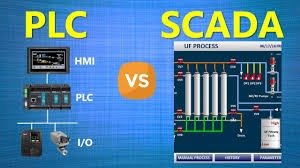
Industrial automation thrives on communication. At the heart of every efficient manufacturing floor or process control system lies a silent conversation between two critical components: the machine’s brain and its face. For decades, engineers treated the logic controller and the operator interface as separate entities, often requiring different software packages, cables, and even distinct specialized skill sets to manage.
However, the landscape is shifting. As industries demand higher efficiency and tighter integration, the line between HMI Software and PLC Programming is blurring. Modern control solutions are moving toward unified environments where logic and visualization coexist seamlessly. This evolution isn’t just a matter of convenience; it is a fundamental change in how we approach machine design, offering significant advantages for system integrators and Original Equipment Manufacturers (OEMs) alike.
By understanding how these technologies intersect, businesses can unlock new levels of productivity, reduce development time, and create more intuitive user experiences for operators.
The Core Components of Industrial Control
To appreciate the value of integration, we must first look at the individual roles these technologies play on the factory floor.
The Role of PLC Programming
The Programmable Logic Controller (PLC) is the ruggedized computer responsible for the heavy lifting. It reads inputs from sensors—like temperature gauges, limit switches, and optical eyes—and executes a program to drive outputs, such as motors, valves, and lights. PLC Programming is the method by which engineers define these rules.
Traditionally, this programming relies on standard languages defined by IEC 61131-3, including Ladder Logic (LAD), Function Block Diagram (FBD), and Structured Text (ST). The primary goal of any PLC program is reliability and speed. It must execute logic cycles in milliseconds to ensure safety and precision.
The Function of HMI Software
While the PLC handles the logic, the Human-Machine Interface (HMI) serves as the window into the process. HMI Software allows developers to create graphical screens that operators interact with. These screens display real-time data, alarms, and trends, while also providing buttons and sliders to control the machine.
Good HMI design is about clarity and usability. It transforms complex binary data from the PLC into understandable visuals—turning a generic “Bit 1042 On” signal into a clear “Tank A Full” indicator.
The Convergence of Logic and Visualization
In the past, working with these two systems meant juggling multiple software licenses and dealing with communication driver issues. You would write your logic in one application, design your screens in another, and then spend valuable time mapping tags and addresses to ensure they talked to each other correctly.
Today, advanced automation platforms are bringing these worlds together. We are seeing a rise in integrated development environments (IDEs) where HMI Software and PLC Programming tools reside within a single interface.
Streamlined Development Workflows
When visual design and logic control are managed in a unified environment, the development process accelerates significantly. Engineers no longer need to duplicate their efforts by creating a tag database in the PLC and then manually importing it into the HMI. Instead, variables created for logic control are instantly available for visualization.
This synchronization reduces the risk of human error. Typos in address mapping—a common headache in legacy systems—are virtually eliminated. For OEMs, this speed is a competitive advantage. It allows for faster prototyping and quicker turnaround times when customizing machines for specific client needs.
Reduced Hardware Complexity
The convergence isn’t limited to software. Hardware is also adapting. Many modern HMI panels now possess the processing power to run PLC Programming logic internally. This “HMI+PLC” hybrid architecture removes the need for a separate PLC module in many applications, reducing panel space requirements and wiring complexity.
Empowering Manufacturers with OEM Software
For machine builders, the software experience is just as important as the hardware performance. This is where high-quality OEM Software becomes a differentiator.
OEMs face a unique challenge: they must build standard machines that are reliable and easy to support, yet flexible enough to be customized for different end-users. OEM Software tailored for industrial automation provides the tools necessary to protect intellectual property while offering flexibility.
Customization and Branding
A robust OEM Software package allows manufacturers to create distinct, branded interfaces that stand out in the market. It goes beyond simple logo placement; it involves creating custom function blocks and object libraries that define the “feel” of the machine.
By utilizing flexible HMI Software, OEMs can design template screens that can be easily adapted. If a client needs an extra monitoring page or a different language setting, the modification can be handled without rewriting the entire application.
Intellectual Property Protection
One of the critical concerns in PLC Programming is protecting the proprietary algorithms that make a machine unique. Advanced software solutions offer robust security features, allowing OEMs to lock specific function blocks or code sections. This ensures that while the end-user can maintain the machine and adjust basic parameters, the core logic that provides the competitive edge remains secure.
The Impact on Maintenance and Usability
The ultimate test of any automation system is how well it functions after commissioning. The integration of HMI Software and control logic has profound implications for maintenance teams and operators.
Enhanced Diagnostics
When the HMI and PLC share a brain, diagnostics become far more powerful. Alarms are no longer just static messages triggered by a bit. The HMI can display the specific line of code or logic branch that caused the fault, allowing maintenance technicians to troubleshoot issues directly from the screen without needing to hook up a laptop.
Remote Access and Monitoring
Modern OEM Software often includes capabilities for IIoT (Industrial Internet of Things) connectivity. This allows for remote monitoring and programming. If a machine in a different country encounters an issue, an engineer can remotely access both the visualization and the logic to diagnose the problem. This capability drastically reduces downtime and travel costs associated with service calls.
Selecting the Right Software Solution
With so many options available, choosing the right platform for PLC Programming and visualization can be daunting. Here are key factors to consider:
- Standardization: Look for software that supports IEC 61131-3 standards. This ensures that your code is portable and that any engineer familiar with standard industrial programming can support the system.
- Scalability: The software should handle everything from small, simple machines to complex, multi-axis systems. You want a tool that grows with your projects.
- Simulation Capabilities: The ability to simulate both the HMI screens and the PLC logic on a PC before deploying to hardware is invaluable for debugging and testing.
- Support and Community: A strong support network and extensive documentation are vital, especially when adopting new platforms.
The Future of Automation Software
As we look ahead, the role of HMI Software will continue to expand. We are moving toward interfaces that are not just reactive but predictive, utilizing AI and machine learning to suggest optimizations to the operator.
Similarly, PLC Programming is becoming more accessible. While Ladder Logic remains king for its visual simplicity in maintenance, higher-level languages are being integrated to handle complex data processing tasks that modern manufacturing data requires.
The reliance on specialized OEM Software will also grow as hardware becomes commoditized. The value of a machine will increasingly be defined by the intelligence of its code and the intuitiveness of its interface, rather than just the metal and motors.
Embracing a Unified Approach
The days of treating the screen and the controller as isolated islands are fading. The most successful automation strategies today embrace the synergy between visual interface and logic control. By leveraging integrated tools, engineers can build smarter, faster, and more reliable systems.
Whether you are an end-user looking to upgrade a production line or a machine builder seeking the best OEM Software to power your next innovation, prioritizing the integration of HMI Software and PLC Programming is the surest path to operational excellence. It streamlines development, simplifies maintenance, and ultimately delivers a superior product to the manufacturing floor.













Discussion about this post