


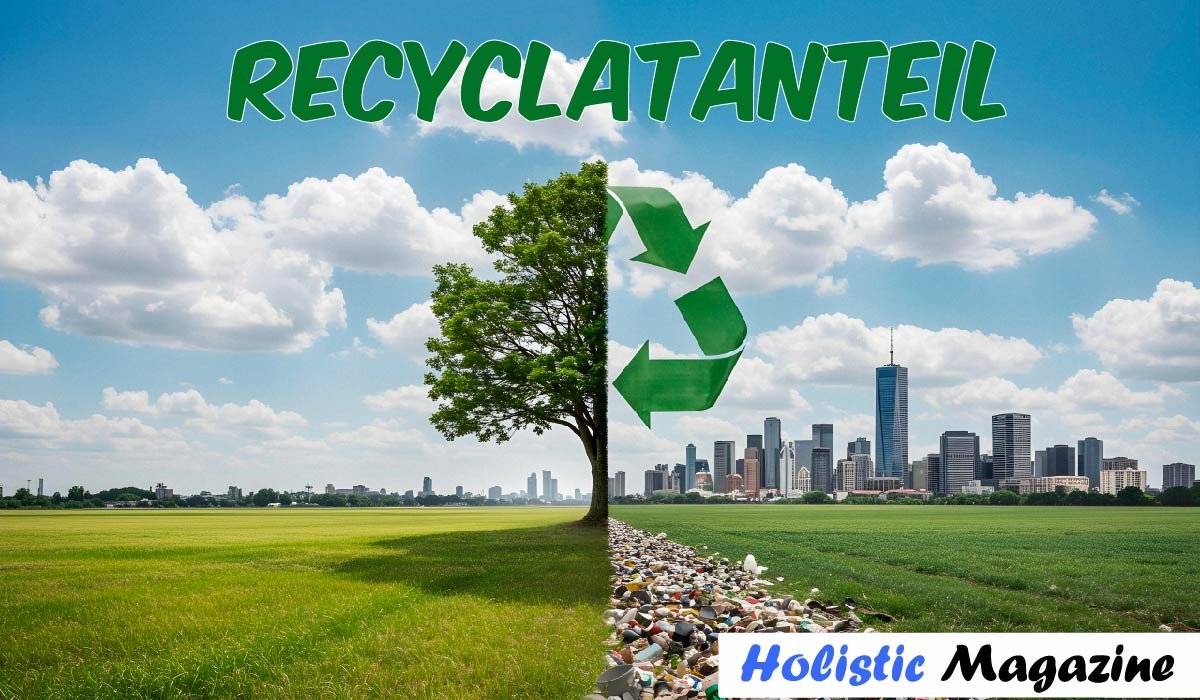
As global industries race toward more sustainable practices, one concept has rapidly emerged as a game-changer in measuring real environmental progress: Recyclatanteil. Put simply, Recyclatanteil refers to the percentage of recycled material used in the manufacturing of a new product. But while recycling rates often make headlines, they only tell half the story. Just because waste is collected doesn’t mean it returns to production. Recyclatanteil, on the other hand, reveals whether that waste is actually being reused, making it the true indicator of circular economy performance. In this article, you’ll learn what Recyclatanteil means, how it differs from the recycling rate, how it’s calculated, and why it’s crucial for sustainability, regulation, innovation, and consumer trust in the age of green accountability.
What Is Recyclatanteil?
Recyclatanteil is defined as the percentage of recycled input—either post-consumer or post-industrial—used in the creation of a product. While the term may sound technical, the concept is simple and highly impactful. It measures how much recycled content actually makes it back into production, not just how much is collected. This is critical, because many products claim to be recyclable, yet few contain actual recycled material.
Unlike the recycling rate, which reflects the percentage of waste diverted from landfills and sent to recycling facilities, Recyclatanteil focuses on the material’s second life. A real-world analogy might help: imagine a chef collecting leftover ingredients (recycling rate), but only using a small portion to cook the next dish (Recyclatanteil). Thus, the Recyclatanteil tells us how circular the process really is.
The basic formula is:
Recyclatanteil (%) = (Weight of recycled input ÷ Total input weight) × 100
The higher this number, the more resource-efficient and sustainable the product becomes. Ultimately, Recyclatanteil provides companies and consumers with a clear, quantifiable indicator of environmental responsibility.
Why Recyclatanteil Matters for Sustainability
Recyclatanteil plays a foundational role in advancing sustainability goals. First and foremost, increasing the recycled content of products directly reduces dependency on virgin raw materials. This conserves non-renewable resources, like petroleum for plastics and metal ores for electronics, while dramatically lowering carbon emissions from extraction and processing. As a result, companies that raise their Recyclatanteil are making tangible contributions to global climate mitigation efforts.
From an economic standpoint, Recyclatanteil adds resilience to supply chains by creating stable markets for recyclates and reducing exposure to fluctuating commodity prices. Over time, this can lead to cost savings and better long-term resource planning. Furthermore, integrating recycled materials into production helps companies meet ESG (Environmental, Social, and Governance) criteria, which is increasingly critical for investor confidence.
Brands that promote high Recyclatanteil enjoy enhanced reputation and customer loyalty, especially among eco-conscious consumers. It also aligns with the United Nations Sustainable Development Goals, particularly Goal 12: Responsible Consumption and Production. Therefore, Recyclatanteil is not only an operational metric—it is a strategic tool for future-proofing business models in an environmentally conscious world.
Recyclatanteil vs Recycling Rate: Understanding the Difference
To make informed decisions, it’s essential to understand the difference between Recyclatanteil and recycling rate. These two metrics are often confused, yet they measure entirely different outcomes.
| Feature | Recycling Rate | Recyclatanteil |
|---|---|---|
| Focus | Waste collection | Material reuse in new products |
| Who’s Responsible | Consumers & municipalities | Manufacturers |
| Example | 40% of plastic bottles recycled | New bottle contains 25% recycled plastic |
| Misconception | High rate = sustainable | True sustainability = high recycled content |
While a high recycling rate reflects good intentions, only a high Recyclatanteil ensures that those efforts translate into new sustainable products. Without closing the loop through actual reuse, waste often ends up downcycled, exported, or even landfilled. That’s why Recyclatanteil is the true metric of a working circular economy.
How Recyclatanteil Is Measured
Measuring Recyclatanteil requires a transparent and traceable accounting of material inputs. The standard method uses the formula:
Recyclatanteil = (Recycled material weight ÷ Total material weight) × 100
There are two main types of recycled content:
-
Post-Consumer Recyclate (PCR): Material recovered after consumer use, such as bottles and packaging.
-
Post-Industrial Recyclate (PIR): Manufacturing scrap that is reprocessed before reaching consumers.
PCR is generally more impactful, as it diverts waste from landfills. However, it can be more contaminated and costly to process. In contrast, PIR is cleaner and more readily available, but contributes less to true waste reduction.
To ensure credibility, certifications like ISO 14021, RecyClass, and SGS Chain of Custody verify claims. These systems audit the full material journey and standardize recycled content declarations, allowing businesses to back their sustainability messaging with trustworthy data.
Types of Recycled Materials Used in Manufacturing
Manufacturers across industries use a diverse range of recycled materials, depending on their products:
-
Plastics: PET (bottles), HDPE (jugs), LDPE (bags)
-
Metals: Recycled aluminum and steel are common in automotive and construction
-
Paper: Recycled cardboard and fiberboard dominate packaging
-
Glass: Crushed glass cullet is reintroduced into container and architectural glass
-
Textiles: Recycled cotton, polyester from bottles (rPET)
-
Composites: Reused wood-plastic or fiberglass materials in construction or furniture
Each material comes with unique challenges and opportunities in terms of quality control, cost, and availability, which affects its Recyclatanteil potential.
Mechanical vs Chemical Recycling: Impacts on Recyclatanteil
Recyclatanteil is also influenced by the type of recycling process used:
-
Mechanical Recycling involves cleaning, shredding, and remelting. It is cost-effective and widely adopted but can lead to quality degradation.
-
Chemical Recycling breaks down polymers into monomers or oils. It allows for high-purity recyclate, even from mixed or contaminated waste, but is more energy-intensive and costly.
| Feature | Mechanical | Chemical |
|---|---|---|
| Input Purity Needed | High | Low |
| Recyclate Quality | Moderate | High (like virgin material) |
| Recyclatanteil Potential | Limited by degradation | Higher, suitable for food-grade or medical use |
Together, these methods are reshaping how we maximize Recyclatanteil in more challenging product categories.
Global Regulations Driving Recyclatanteil
Governments are increasingly mandating Recyclatanteil through legislation:
-
EU Single-Use Plastics Directive: Requires 25% rPET in bottles by 2025, 30% by 2030.
-
UK Plastic Packaging Tax: Levies a fee on packaging with <30% recycled plastic.
-
California AB 793: Phased increase to 50% recycled plastic in beverage containers by 2030.
-
Japan and South Korea: Provide incentives for meeting voluntary recycled content thresholds.
These laws make Recyclatanteil a legal and financial priority, not just a green marketing strategy. Certification bodies like TÜV and RecyClass ensure compliance and transparency.
Industry Examples & Case Studies
Numerous sectors are pioneering high Recyclatanteil strategies:
| Industry | Company | Material | Recyclatanteil |
|---|---|---|---|
| Packaging | Coca-Cola | rPET | 100% in some bottles |
| Automotive | BMW | Recycled aluminum | ~40% |
| Fashion | Adidas | rPET textiles | 60–90% |
| Construction | Holcim | Recycled aggregates | 20–30% in concrete |
These case studies prove that technical feasibility and market readiness exist for scaling Recyclatanteil across industries.
Benefits of Increasing Recyclatanteil
The advantages of a higher Recyclatanteil include:
-
Lower carbon footprint and energy usage
-
Conservation of finite resources
-
Stronger consumer brand loyalty
-
Improved ESG scores for investors
-
Compliance with green regulations
-
Decreased reliance on volatile raw material markets
Moreover, companies that lead in this area often become innovation leaders, driving industry transformation from the front.
Challenges in Achieving High Recyclatanteil
Despite its benefits, raising Recyclatanteil comes with real hurdles:
-
Contaminated recycled materials
-
Inconsistent global supply chains
-
Degraded quality in plastics
-
Higher upfront costs for processing
-
Complex regulatory compliance
-
Resistance from design and procurement teams
Nonetheless, these can be overcome with investment in technology, redesign, and industry collaboration.
How Manufacturers Can Increase Recyclatanteil
Companies can boost their It by taking steps such as:
-
Design for recyclability by simplifying material mixes.
-
Use mono-materials to ease reprocessing.
-
Partner with certified recyclers for reliable supply.
-
Prioritize PCR over PIR for maximum impact.
-
Adopt digital traceability tools for transparency.
-
Invest in R&D to develop compatible formulations.
Over time, these efforts build both operational resilience and environmental credibility.
Recyclatanteil as a Competitive Advantage
In today’s marketplace, It creates a brand differentiator. Consumers actively seek sustainable products. Green procurement policies favor recycled content. ESG funds prioritize material traceability. Governments mandate usage. All these factors combine to make It a profitable, defensible, and ethical strategy.
Future Trends in Recyclatanteil
As technology evolves, expect growth in:
-
Digital Product Passports linking material data to products
-
Blockchain for material origin verification
-
AI sorting to enhance recycling efficiency
-
Chemical recycling expanding viable feedstocks
-
Stricter mandates for recycled content worldwide
These trends will embed It deeper into policy, technology, and commerce.
Conclusion: From Waste to Worth
As sustainability becomes more urgent, It offers a real metric of circular progress. It’s no longer enough to recycle; the future lies in reusing that material effectively. By focusing on It, manufacturers reduce environmental impact, consumers make informed choices, and society steps closer to a circular, regenerative economy. Demand more than green labels—demand higher It in everything you buy.
FAQs about Recyclatanteil
What does It mean?
Recyclatanteil is the percentage of recycled material used in the manufacturing of a new product.
Is It the same as recycling rate?
No. Recycling rate is about how much waste is collected; Recyclatanteil is about what gets reused.
How is It calculated?
Divide recycled input weight by total input weight, then multiply by 100 for a percentage.
Why is it important for the circular economy?
It closes the loop by ensuring materials are reused, reducing virgin resource extraction.
How can companies increase It?
By using more PCR, redesigning products, improving sorting, and investing in better recycling processes.
Also Read :
DarlNaija: Nigeria’s Digital Culture Powerhouse
Visit For More Info : Holistic Magazine














Discussion about this post