


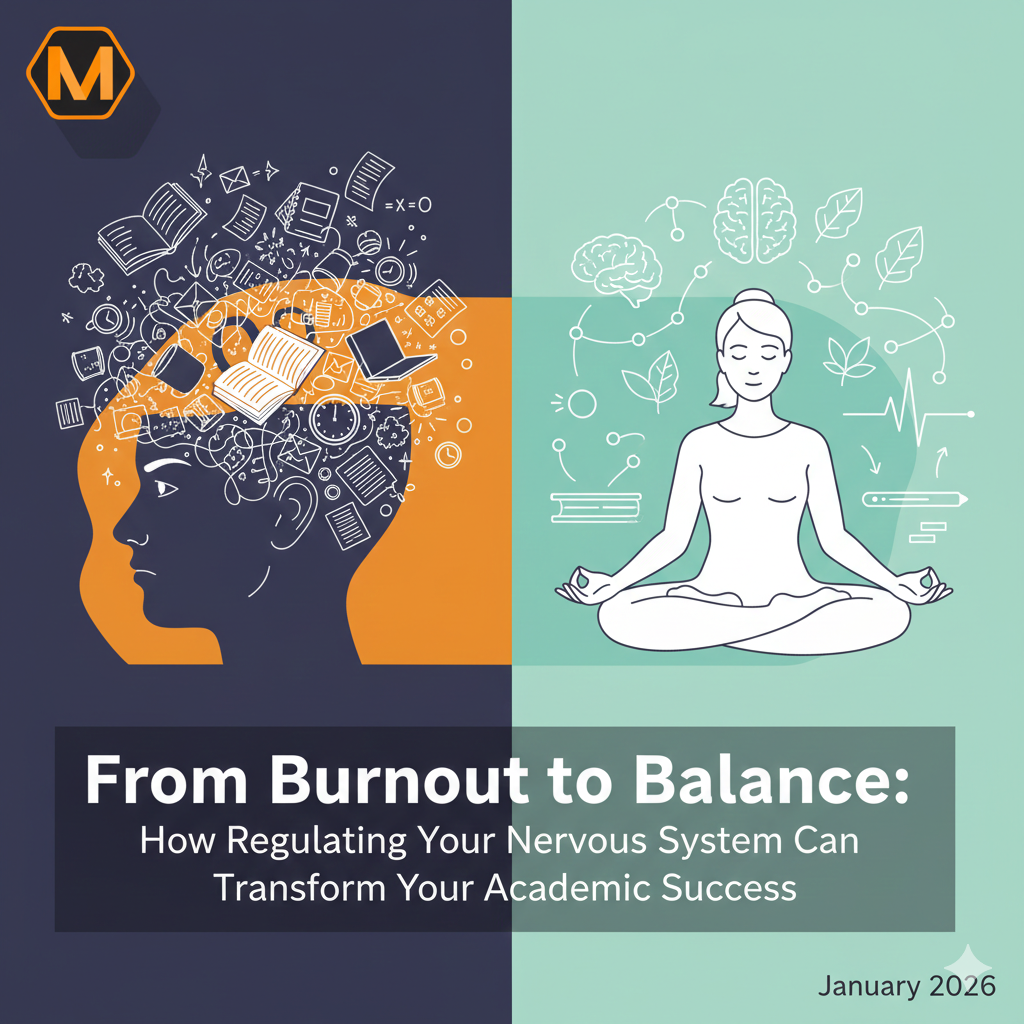
In the competitive landscape of United Kingdom higher education, the year 2026 has marked a turning point in how we perceive student achievement. For decades, the “all-nighter” was wearing a badge of honour, but a paradigm shift is occurring. We are moving away from the “hustle culture” that prioritises output at any cost and toward a “neurowellness” model that acknowledges a fundamental truth: A dysregulated nervous system cannot learn.
For students at top-tier institutions from London to Edinburgh, the pressure to maintain a high GPA while navigating an increasingly volatile global economy has led to a silent epidemic of burnout. This article explores the physiological mechanics of academic stress and provides a roadmap for students to reclaim their cognitive power through nervous system regulation.
Understanding the Physiological Wall
Academic burnout is not merely a state of being “tired.” It is a physiological state where the body’s Autonomic Nervous System (ANS) has been stuck in a chronic state of “fight or flight” (the Sympathetic nervous system) for too long. When you are faced with a daunting deadline or a complex dissertation, your amygdala—the brain’s fire alarm—triggers a cascade of cortisol and adrenaline.
While this response is designed to save you from immediate physical danger, the modern student’s “predator” is a digital calendar full of deadlines. According to the Mental Health UK Burnout Report 2025, 1 in 3 adults in the UK feel that their work-life balance is “poor to very poor,” and this trend is most pronounced in the student population. When your body stays in this high-alert state, the prefrontal cortex—the part of the brain responsible for logic, language, and complex problem-solving—literally goes offline.
In this state of “survival mode,” your ability to process information drops by as much as 40%. This is why, despite staring at a screen for eight hours, you might find you haven’t written a single coherent sentence. In such instances, the most logical step for a student’s mental health is to reduce the load. Accessing professional assignment Help is often the strategic intervention needed to break the cycle of “freeze” and allow the nervous system to return to a state of safety.
The UK Student Mental Health Crisis: The 2026 Data
The statistics surrounding student wellbeing in the UK are a stark reminder of the need for holistic intervention. Recent data from The Higher Education Policy Institute (HEPI) suggests that nearly 60% of students feel that their mental health has interfered with their academic performance at least once in the last semester.
| Category | UK Student Statistic (2025-2026) | Impact on Success |
| Chronic Stress | 72% report frequent anxiety | Reduced memory retention |
| Sleep Deprivation | 58% get less than 6 hours | Impaired executive function |
| Burnout Rate | 45% feel “completely exhausted” | Higher withdrawal rates |
| Social Isolation | 30% feel lonely “often” | Lowers dopamine and motivation |
The data confirms that the traditional “push through it” mentality is failing. When the nervous system enters a “Dorsal Vagal” state—otherwise known as the “shutdown” response—no amount of caffeine or willpower can force the brain back into a creative state. This is where students must learn to differentiate between “laziness” and “biological exhaustion.”
The Coursework Conundrum
One of the primary drivers of this shutdown is the sheer volume of modular assessments. Unlike a single final exam, the modern UK curriculum relies heavily on continuous coursework, which keeps the stress response active for months at a time. This constant “drip” of cortisol leads to systemic inflammation and cognitive fatigue.
Recognising that the human brain was not evolved to handle sixteen hours of high-level digital cognitive labour every day is the first step toward balance. For many, the realisation comes that they cannot maintain their health while managing every single technical requirement of their degree alone. It is becoming increasingly common for students to search for ways to do my coursework UK to delegate time-consuming research and formatting tasks. This isn’t about avoiding work; it is about “energy budgeting”—protecting one’s limited cognitive resources for the subjects and exams that matter most.
The Student Nervous System Ladder
How to Regulate Your System for Peak Performance
To move from the “Shutdown” or “Survival” zones back into the “Growth Zone,” you need physical interventions. You cannot “think” your way out of a nervous system response; you must “act” your way out.
1. The Physiological Sigh
Championed by neuroscientists at Stanford and widely adopted by performance coaches in the UK, the “physiological sigh” is the fastest way to lower your heart rate. Inhale deeply through your nose, follow it with a second short “pop” of air to fully inflate the lungs’ alveoli, and then exhale slowly through the mouth. Doing this three times tells your brain that you are safe.
2. Cold Water Stimulus
The vagus nerve, which acts as the “brake” for your stress response, can be stimulated by cold. Splashing ice-cold water on your face or holding an ice pack to your chest for two minutes can trigger the “mammalian dive reflex,” forcing your system to calm down instantly.
3. Time-Blocking with “Real” Breaks
A “break” is not scrolling through TikTok. Digital consumption keeps the brain in an “active” state. A real break involves moving your eyes away from a screen, preferably looking at a distance (to relax the ciliary muscles of the eye) and engaging in gentle movement like a walk in a local park.
4. Radical Acceptance of Limits
The most successful students in 2026 are those who treat themselves like high-performance athletes. An athlete would never train on a broken leg; a student should not attempt a 5,000-word report during a mental health crisis. Delegation and the use of support services are tools of the “smart” student, not the “struggling” one.
Conclusion: Success is a Marathon, Not a Sprints
As we navigate the academic year, remember that your brain is a biological organ, not a machine. To achieve true academic success in the UK’s rigorous environment, you must prioritise the health of your nervous system. By balancing intense focus with periods of deep rest and knowing when to delegate tasks to professional services, you ensure that you don’t just graduate, but you graduate healthy, resilient, and ready for the future.
FAQs: Navigating Academic Stress
Q. Is it ethical to seek external help with my studies?
Yes, seeking support is a standard part of professional and academic life. Whether it is a tutor, a mentor, or a professional service, using resources to manage your workload is a key skill in time management and self-preservation.
Q. How long does it take to recover from burnout?
Minor burnout can be managed with a few days of total “digital detox” and nervous system regulation. However, chronic burnout can take months to fully heal, which is why prevention is always better than a cure.
Q. Does caffeine help with burnout?
Actually, caffeine can make burnout worse by artificially stimulating the Sympathetic nervous system, leading to a harder “crash” later. In a state of burnout, your body needs rest, not more stimulants.
References
- Mental Health UK (2025). “The Burnout Report: National Trends in Stress and Wellbeing.”
- HEPI (2026). “Student Academic Experience Survey: The Mental Health Impact.”
- University of Manchester Research (2024). “Neuroplasticity and Stress: How Academic Pressure Re-wires the Brain.”
- NHS Digital (2025). “Mental Health of Children and Young People in England.”
Author Bio
Dr. Alistair Thorne is a Senior Content Strategist and Educational Psychologist based in Bristol, UK. With over 15 years of experience in student advisory roles, Alistair collaborates with MyAssignmentHelp to focus on the intersection of cognitive science and lifestyle medicine. He is a frequent contributor to wellness publications, helping students navigate the complexities of modern academia without sacrificing their mental health.











Discussion about this post