


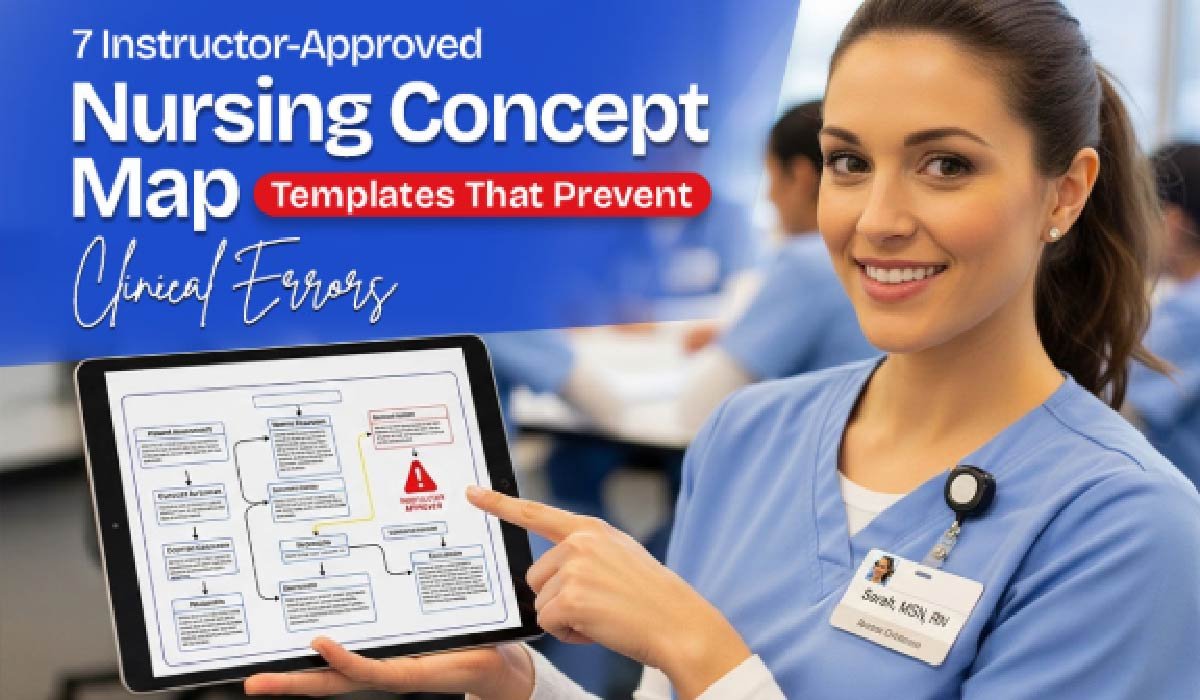
In 2026, UK nurses face high patient acuity and ongoing staffing shortages. For example, over 34,000 nurses left the NHS in 2022, which is a 25% rise from the last year. The main reason could be the lack of knowledge materials. Therefore, efficient tools are crucial. Nursing concept maps are visual diagrams that link patient data, diagnoses, and interventions into a clear plan.
With the help of these visuals, nurses can decrease duplication and help you spot priorities quickly. In fact, UK experts note that concept maps can improve patient safety and care quality by supporting person-centred, problem-solving planning.
This article reviews the 7 best nursing concept map templates for 2026. We’ll break down their usability, customizability, and relevance to modern practice. You’ll learn how each template works and when to use it. Finally, we share tips on adapting templates for UK healthcare. Keep reading to learn more.
Key Points for a Quick Look
- A nursing concept map is a visual way to connect patient problems, assessments, diagnoses, and interventions in one clear layout.
- Using ready-made templates saves time and helps nurses avoid missing key clinical information.
- Concept maps improve critical thinking and prioritisation, making it easier to see what matters most in patient care.
- There are 7 common nursing concept map templates. These include basic nursing, comprehensive clinical, disease-specific, hierarchical care plan, mental health nursing, pharmacology map and system-specific map.
- Choosing the right template depends on patient complexity, care setting, and learning goals, not just personal preference.
What Are Nursing Concept Maps and Why Use Templates in 2026?
Nursing concept maps are diagrams that organise and connect clinical information. They typically place a patient problem or diagnosis at the centre and draw branches for related elements, such as symptoms, risk factors, labs or interventions. Each connected box holds a piece of information, and linking lines show relationships.
An important thing to consider is that concept maps are not just study aids. They have educational and clinical value. A study published on PubMed Central reports that concept mapping improves critical thinking, decision-making and problem-solving skills in students. Similarly, they also help with boosting students’ performance as well as memory retention.
They also support better academic performance and improve memory retention. When students use concept maps to organise their studies and homework, they develop clearer arguments and stronger assignment structures. This clarity becomes even more valuable when working with an assignment writing service in London, as well-organised ideas lead to higher quality academic work.
Why Use Nursing Maps Templates?
Creating a concept map from scratch can be time-consuming and easy to misstep. In 2025, more than 18,000 nurses got their admissions. Having a map helps them easily memorise the concepts. They outline the main categories and logical flow you should include. For example, a good template might already have sections for patient history, lab data, NANDA diagnosis fields, and a space for interventions/outcomes.
Nurses in education and practice have long relied on nursing concept maps to bridge the gap between theory and care. A UK Nursing Standard article highlights concept mapping as a “person-centred problem-solving aid” that supports risk management and care planning. In other words, when you build a map, you’re more likely to notice relationships between issues and ensure each care decision is grounded in the patient’s unique profile.
The 7 Best Templates for Nursing Concept Maps in 2026
Struggling to connect pathophysiology, diagnoses, and interventions? These 2026-ready nursing concept map templates make it effortless. We’ve selected templates that cover a range of needs. Each template type below includes the typical structure, key components, and when it shines. Explore more below:
1. Basic Nursing Concept Map Template
A basic template is ideal for beginners or simple cases. It usually looks like a spider diagram. You can see one central box (for the main nursing concern or diagnosis) with lines radiating out. These lines connect with subcategories like “Assessment”, “Diagnostics”, “Interventions”, and “Outcomes”. Building this map starts by placing the patient’s primary issue in the centre. For example, start with the chief complaint (e.g. “chest pain”) and then gather all assessment data (vitals, lab values, symptoms, meds) around it. Common categories in a basic template might include:
- Patient Info: These include basic demographic and identification details, such as name, age, gender, etc.
- Relevant History: Include information like past medical, surgical, family or social history
- Symptoms: These are the signs of disease like shortness of breath in case of asthma
- Medications: The medicines a patient is receiving for the specific disease
- Nursing Diagnoses: Initial nursing diagnoses for the doctor which are usually based on assessment data
:. You simply fill in each box with the specifics of your patient. After that, arrows or connectors are drawn to show how items relate.
How to Build a Basic Spider Nursing Concept Map?
UWorld has a very simple step-by-step guide to create a basic spider nursing map. In fact, this is one of the most common formats used in nursing education. This spider-style map places the patient’s primary issue at the centre, with related data, diagnoses and interventions. By following these steps, nursing students can turn scattered assessment data into a cohesive visual tool:
- Step 1: Start in the centre with the patient’s main problem. Place the primary medical diagnosis or central health issue here.
- Step 2: Then enter all collected data in the surrounding nodes of the nursing concept map. These include vital signs, lab results, symptoms, history, medications or psychosocial factors.
- Step 3: Formulate a NANDA-style diagnosis for each cluster and place that in its own branch. Review the grouped data clusters, then create prioritised NANDA-I nursing diagnoses.
- Step 4: Next, connect interventions or goals to each diagnosis. Use linking phrases as needed for clarity.
2. Comprehensive Clinical Concept Map
The comprehensive clinical template is a detailed layout for complex cases (e.g. multi-system issues or critical care patients). It often expands on the basic spider format by adding secondary layers and cross-links between branches. For instance, after you place the central diagnosis and key nursing diagnoses, a comprehensive map might include additional sub-branches for Patient Goals, Family/Support Factors, Lab Trends, Medications, and Interdisciplinary Notes.
Layout and Elements of a Clinical Concept Map
A clinical concept map acts like a multi-tier spider. At the top level is the main patient concern. From there, first-level branches might be signs, diagnostics, risk factors, and nursing diagnoses. Each nursing diagnosis then has its own sub-branches for related factors and evidence. Finally, include Interventions and Outcomes for each diagnosis. Here are the typical hierarchical elements in a spider-style clinical concept map:
- Central Node (Top Level): The main patient concern is placed prominently in the centre. This section also acts as the anchor for the entire map.
- First-Level Branches: Major categories radiating directly from the centre, such as:
- Signs & Symptoms (current presenting issues)
- Diagnostics (lab results, imaging, tests)
- Risk Factors or Aetiology (contributing causes or predispositions)
- Nursing Diagnoses
- Second-Level Branches (Sub-branches under Nursing Diagnoses): For each diagnosis, include other factors such as :
- Related Factors (aetiology or “related to”)
- Defining Characteristics or Evidence (“as evidenced by” specific data)
- Third-Level Branches: These are often placed and connected to each diagnosis. These include:
- Interventions (specific, evidence-based nursing actions or treatments)
- Expected Outcomes / Goals (measurable, patient-centred targets with timelines)
Note that the second and third-level branches are optional. Students often include them for their own understanding. Plus, advanced users or nursing students might use colour-coding or icons to distinguish priorities or system types. In fact, some even take help from digital tools like Canva or EdrawMind to expand/collapse sections so the map doesn’t get visually cluttered. You could even embed notes or hyperlinks (in a PDF/Word template) for evidence-based guidelines or drug references.
3. Disease-Specific Nursing Concept Map Template
As the name implies, the disease-specific template is designed around one condition. For example, a diabetes concept map template might centre on Type 2 Diabetes Mellitus and have branches for pathophysiology, risk factors, complications, nursing care and patient teaching.
The best thing about a disease-specific template is that it provides in-depth help about a single disorder, instead of giving a general outlook. On top of that, you can easily find ready-made templates for conditions like Hypertension, COPD, or Pneumonia online. These pre-made templates save you from the hassle of creating a template from scratch.
Design of a Disease-Specific Template
Disease-specific concept maps keep the focus tightly on the primary condition. Branches radiate outward to cover key aspects like how the disease works. Therefore, this format is highly customizable. Here is a table summarising the typical design elements of a disease-specific spider concept map:
| Element | Key Content Focus | Purpose / Why Include It |
| Central Node | Disease name or main diagnosis | Anchors the map as everything connects back to the core condition |
| Pathophysiology | How the disease affects the body | Explains underlying mechanisms; links cause to symptoms |
| Signs & Symptoms | Common manifestations | Highlights hallmark features for quick recognition |
| Risk Factors | Predisposing elements | Identifies contributors; supports prevention teaching |
| Complications | Potential serious outcomes | Shows progression; guides monitoring and priority setting |
| Nursing Interventions & Education | Disease-specific actions & teaching | Translates knowledge into practical, targeted care |
4. Hierarchical Care Plan Template
The hierarchical template organises information by priority. It is like a pyramid or drop-down chart where the most urgent problems are highlighted first. In this template, life-threatening issues (e.g. Airway/Breathing in an acute patient) go at the top or in a prominent colour, followed by less acute problems.
Unlike basic or disease-focused concept maps in nursing, this template does not treat all problems equally. Instead, it visually ranks nursing concerns based on urgency and risk. This makes it particularly useful in acute and high-pressure clinical environments.
Structure of Hierarchical Care Plan Template
In this template, the most life-threatening issues are placed at the top or centre of the map. This structure reflects how nurses actually think during clinical shifts. Main benefits include faster scanning during handoffs or emergencies, better alignment with ABCs and a lower chance of missing life-threatening problems. Here is the breakdown of the structure:
- Central or Top Placement: Most life-threatening issues sit here. These must be handled first to prevent harm or death.
- Lower or Secondary Placement: Less urgent concerns appear here. You have to address them after the patient is stable.
- Priority Levels: Many maps divide content into tiers. Level 1 covers immediate threats. Level 2 covers high-risk situations. Level 3 covers stable but real problems. Level 4 covers health promotion. Use numbers, colours, or bold labels to show the order.
- Visual Flow: The layout guides the eye from the highest priority downward or outward. It follows the natural nursing process of assessing and prioritizing. This makes the plan logical and easy to follow.
Priority Ranking System in Hierarchical Care Plan Explained
The priority ranking system is the defining feature of the hierarchical care plan template. It requires you to organise nursing problems as per severity rather than convenience. Typically airway, breathing, and circulation issues are given the highest priority. After that, you can put neurological status, infection risk, pain, and psychosocial needs.
Using this ranking system also encourages evidence-based justification. Each priority should be supported by assessment findings such as vital signs, blood results, or early warning scores. This makes the concept mapping nursing defensible during assessments and handovers.
5. Mental Health Nursing Map Template
A mental health concept map template shifts focus from physical symptoms to psychological and social factors. This map is highly effective in dealing with patients who have mental health-related issues. Therefore, nurses widely use it in areas like logotherapy. Key branches of this map include the therapeutic relationship, coping/defence mechanisms, environmental/support systems, and recovery goals.
Features of Mental Health Nursing Map
A mental health map includes sections for psychosocial history, stressors, and protective factors. You can add nursing diagnoses sections like “Ineffective Coping” or “Risk for Self-Harm.” Under each part, different branches emerge for specific interventions. This template also highlights therapeutic communication techniques as part of the map. Similarly, if you want to write psychiatric nursing dissertations, always consider the structure of your research and topic information. Here is a quick breakdown of this template below:
| Element | Position / Focus | Key Content Examples |
| Central Node | Center | Primary diagnosis or presenting issue |
| Therapeutic Relationship | Main branch | Trust building, empathy, active listening |
| Coping Mechanisms | Main branch | Adaptive and maladaptive strategies |
| Environmental Support Systems | Main branch | Family, community resources, social network |
| Recovery Goals | Main branch | Stabilisation, independence, and relapse prevention |
| Psychosocial History | Supporting branch | Past trauma, life events |
| Stressors and Protective Factors | Supporting branch | Current triggers and resilience factors |
| Nursing Diagnoses | Connected branches | Ineffective Coping, Risk for Self-Harm |
| Interventions | Sub-branches | Reality orientation, therapeutic communication |
Suitability of Mental Health Nursing Map
Use a mental health map for psychiatric rotations, community mental health, or any nursing program integrating psychosocial care. It’s especially useful in the 2020s as nursing places more emphasis on mental well-being alongside physical health. You will find a mental health nursing map especially suitable in the following contexts:
- Psychiatric clinical rotations, where care planning centres on therapeutic relationships, risk assessment and behavioural change.
- Community mental health settings, including crisis teams, outpatient services and home-based care.
- Nursing programmes with a psychosocial focus, such as adult, mental health, and learning disability nursing.m
- Long-term condition management, where mental health impacts treatment adherence and recovery.
- Reflective practice and case discussions allow deeper exploration of patient experiences and coping mechanisms.
6. Pharmacology Concept Map Template
A pharmacology concept map organises drug information by class and mechanism. Instead of linking patient symptoms, you’re linking drugs. Each drug class (e.g. Antibiotics, Antihypertensives) can be a major node. Then branch to specific medications and their details. This concept map in nursing is kind of similar to a disease-specific concept but you are now relating medicines instead of diseases.
Key Components of a Pharmacology Concept Map Template
Pharmacology concept maps organise drug information by focusing on classes rather than individual medications. This approach helps students understand shared mechanisms, effects, and differences within a group. The structure uses a central node for the class mechanism, then branches outward to specific drugs and their details. Find more details about this structure below:
- Central node: Mechanism of action for the entire drug class.
- Main branches: Specific drugs or subclasses within the class.
- Sub-branches under each drug: Therapeutic uses and main indications.
- Sub-branches under each drug: Common side effects and adverse reactions.
- Sub-branches under each drug: Nursing considerations and monitoring points.
- Connecting lines: Links showing shared class effects and individual differences.
7. System-Specific Nursing Concept Map Template
A system-specific concept map template nursing focuses on an entire body system (e.g. Cardiovascular, Respiratory, Renal). Instead of one disease, it covers multiple related conditions. In other words, it is personalised to one patient, instead of a general setup for the whole hospital.
The central node might be the system name or a broad concept. From there, you can branch into other components such as lung anatomy or heart anatomy, common diseases (asthma, pneumonia, COPD under respiratory), and relevant nursing aspects.
Features of System-Specific Template
A system-specific template includes sub-nodes for anatomy, pathophysiology, common conditions, nursing assessment, and interventions. For example, a cardiovascular map could have a branch for “CHF” with sub-branches for oedema and SOB, and another branch for “Medications” like diuretics and ACE inhibitors. It might also cover patient teaching points (e.g. diet, exercise) and diagnostic tools (EKG, echo).
These templates help you integrate knowledge across several diseases at once. When you fill out a map, you’re forced to connect how different diseases share signs or how a treatment for one disease might apply to another. This big-picture view strengthens clinical reasoning.
A Comparison Table for 7 Templates for Nursing Concept Maps
Not all nursing concept map templates serve the same purpose. Each template is designed to support a specific type of clinical thinking. Hence, if you choose the wrong format, it can limit how effectively you analyse a patient’s needs. The given comparison highlights how each template differs in structure, focus, and nursing concept map examples.
| Template | Best For | Structure/Focus | Example Use-Case |
| Basic | Quick cases, beginners | Spider diagram with one central diagnosis with surrounding nodes | First-year student mapping a single diagnosis like “Pneumonia” |
| Comprehensive Clinical | Complex/multi-issue cases | Detailed multi-level map that includes data, labs, multiple diagnoses, goals, etc. | Critical care patient with sepsis and diabetes |
| Disease-Specific | Single-condition care | Disease name/diagnosis in centre and branches for pathophys, labs, risk factors, care | Patient-specific care plan for new-onset Diabetes |
| Hierarchical Care | Acute care prioritisation | Ranked by urgency and critical issues at top | Emergency triage or ICU patient with multiple problems |
| Mental Health | Psychiatric care | Patient’s diagnosis/issue at centre and branches for therapeutic relationship | Psychiatric nursing care plan for depression |
| Pharmacology | Medication review/study | Drug classes as hubs and it links to MOA, uses, and side effects for each drug | Learning antibiotics: class node → drug nodes (MOA, SE) |
| System-Specific | Organ system learning | Body system as core and it covers anatomy, disorders, assessments, and interventions | Comprehensive review of the Respiratory or Cardiac system |
Conclusion
Nursing concept map templates streamline your workflow and bolster critical thinking. In 2026’s complex healthcare environment, having the right template can save time and reduce errors. In nursing, 7 common types of concept map templates are used. These include basic, comprehensive clinical, disease-specific, hierarchical care plans, mental health, pharmacology and system-specific templates.
Each of the 7 templates above serves a different scenario, from quick overviews to in-depth case analysis. By adopting these templates, you can make care planning smarter and more consistent. For nursing students managing heavy workloads, concept maps provide clarity for complex clinical information and help organise ideas into a logical structure. This preparation makes it easier to communicate their ideas, whether they complete the task independently or request guidance from top-rated assignment writing services in Manchester. As a result, their homework reflects stronger clinical reasoning and a more structured approach.
Frequently Asked Questions about Nursing Concept Maps
Q1: What are the 7 steps of creating a concept map?
These are the 7 steps of creating a concept map. First, gather all patient data into your map. Next, cluster and prioritise related information. Then formulate nursing diagnoses. Step 4 is to list appropriate nursing interventions for each diagnosis. Step 5 is to define measurable outcomes for each intervention. Step 6 involves translating the map into a formal care plan or documentation. Finally, implement and evaluate your treatment according to the map and periodically revise it as you get new patient data.
Q2: What is the best concept map maker?
The best concept map maker is making one by yourself. In this way, you can drop down your personal assessments too. However, you can also use some online concept map makers. For example, Creately is often cited for its ease of use and collaboration features. Other popular (and user-friendly) options include Canva, Lucidchart, Coggle, MindMeister, and XMind.
Q3: Can ChatGPT make concept maps?
Yes, ChatGPT itself draws a visual concept map. However, it can’t make a detailed map, just like other special online tools. Instead, it can generate images as per your instructions or prompts. Plus, you can also describe how to create a map or help you list concepts and connections in text form. You could ask ChatGPT to outline, in bullet points, a concept map for a given scenario.















Discussion about this post